The technology behind the room.
Invisible Council isn't a chatbot with a famous name on it. It's a cognitive architecture that recreates the dynamics of a real mastermind — collision, tension, and the emergence of ideas that no single mind could produce alone.
Three steps. Under 60 seconds.
Bring Your Problem
Ask anything. Paste a URL. Drop what’s been keeping you up.
Assemble Your Council
Choose the minds whose thinking your problem demands.
Get the Breakthrough
The council collides until something surfaces that none of them could reach alone.
How the councils and coaching actually work.
Two distinct session types. One designed for collision. One designed for commitment.
The goal is never to get an answer. The goal is to generate the environment where your breakthrough becomes inevitable.
Napoleon Hill didn't describe the Master Mind as a place to get advice. He described it as a third intelligence that emerges when two or more minds harmonize on a problem — an insight that exists in neither mind alone and cannot be produced by one brain working in isolation.
That is the entire purpose of every session inside Invisible Council. Not information. Not recommendation. The aha moment — the clarity that reframes the problem, changes the question, and makes the next move obvious in a way it wasn't sixty minutes ago.
How you use the platform depends on what you need. There are three fundamentally different modes — and each one produces a different kind of breakthrough.
"No two minds ever come together without thereby creating a third, invisible, intangible force which may be likened to a third mind."
— Napoleon Hill · Think and Grow Rich · 1937
That third mind — the insight none of them could produce alone — is what every session type below is engineered to produce. The mechanism changes. The destination is always the same.
Mode 01 — Long-Term Mastermind
Your Life's Board of Directors.
The council that compounds.
The most successful entrepreneurs in history didn't think big alone. They had a room — a trusted group of minds that challenged their assumptions, elevated their thinking, and pushed them toward decisions they wouldn't have reached on their own.
This is that room. A permanent council you return to weekly or every two weeks, built around the domains that matter most to your growth: mindset, philosophy, vision, strategy, and the kind of big thinking that changes the direction of a business — not just the tactics inside it.
The longer you run this council, the more powerful it becomes. The minds begin to understand your patterns, your blind spots, your language. Memory compounds. The Third Mind gets smarter every session.
This council produced the idea for Invisible Council AI itself.
The compounding effect
"The council doesn't just give you answers. It installs a new way of thinking. Weeks later, you're facing a decision and you automatically hear a different voice asking if you've inverted the problem."
— Invisible Council Member
This is the council Sean runs long-term — the group that generated the idea for Invisible Council AI. Not assembled to answer tactical questions, but to elevate the quality of thinking itself. Each mind covers a different domain. The collision between them produces the kind of insight no single advisor ever could.
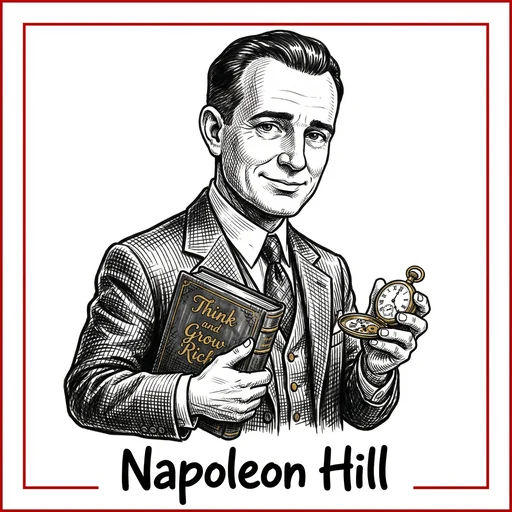
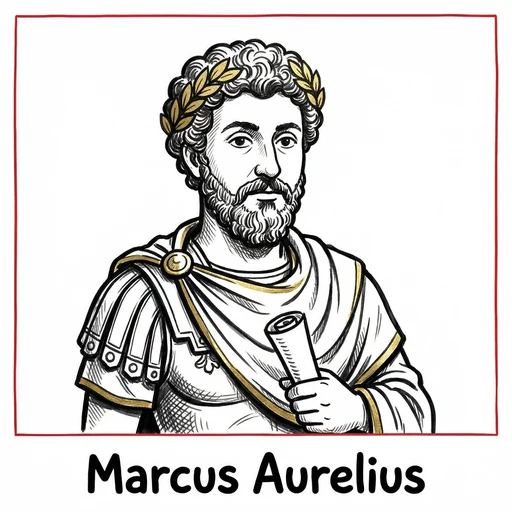
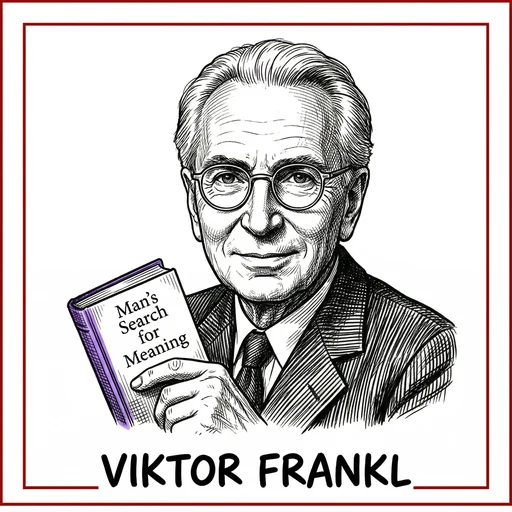
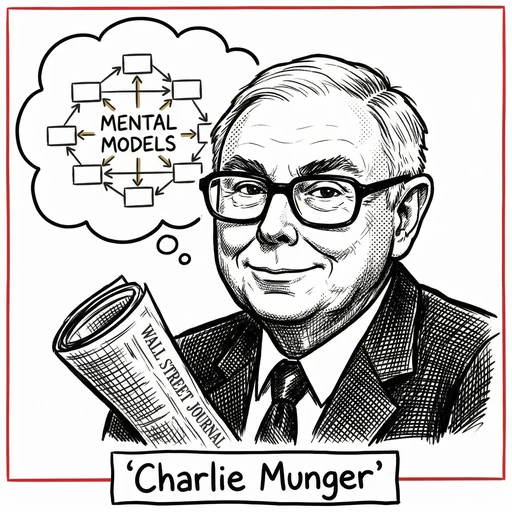

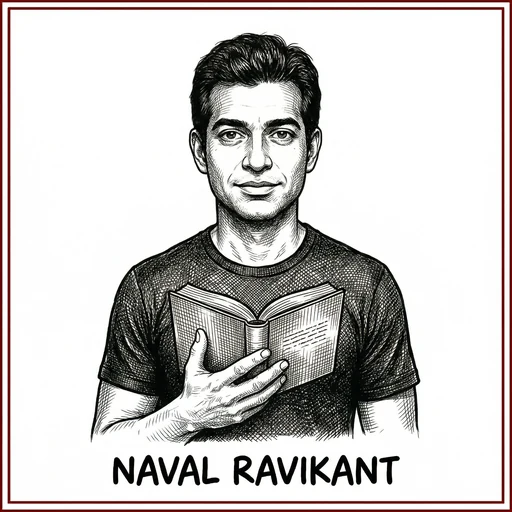

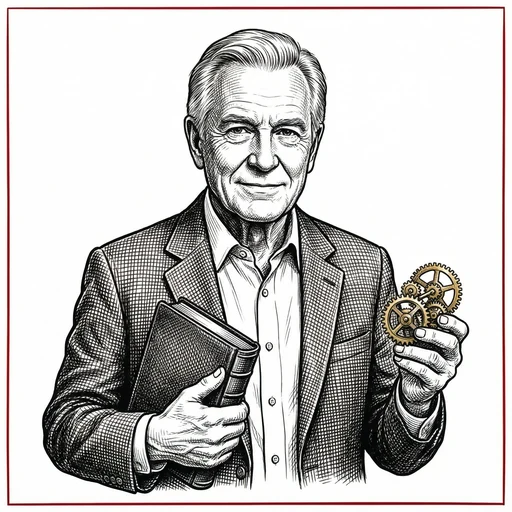
The Third Mind doesn't just appear in a single session. It compounds. Hill ran his Invisible Counsel every night for decades. The minds came to know his patterns, his questions, his language. The same thing happens here. Your board of directors remembers what you brought three sessions ago — the pattern you were stuck in, the blind spot they flagged, the breakthrough that changed the direction. Memory makes the collision richer. The longer the council runs, the deeper the Third Mind goes.
- ✓You're working on a major strategic direction change
- ✓You feel like your thinking has plateaued and you need a bigger perspective
- ✓You're in a season of big decisions that compound on each other
- ✓You want the kind of thinking that changes the game, not just the play
- ✗You need a specific tactical answer by end of day
- ✗You have a single domain problem (copy, tech, finance)
- ✗You need someone to walk you through an execution step
- ✗The problem is urgent and narrow — use coaching for that
See what happens when minds collide.
Real session examples showing how fundamentally different worldviews produce insights that no single mind could reach alone — and why a standard AI chatbot never will.
Same Question.
Entirely Different Universe.
Three real entrepreneur questions. Run through a council session. Then answered cold by a standard AI with no context, no council, no collision.
Your subconscious mind is running a program written by your dominant fears — and you didn’t write that program consciously. The paralysis is not weakness. It is your subconscious protecting you from an outcome it has been conditioned to fear. The six basic fears — poverty, criticism, loss — are operating below your awareness. Until you identify the specific fear driving the calculation and replace it with a definiteness of purpose so vivid the subconscious must serve it, the paralysis will persist. You are not stuck. You are running the wrong program.
Run the actual numbers on the worst case. Not the emotional version — the physics version. If you launch and it completely fails: what actually happens? Write the specific numbers. What do you lose? What is the recovery time? In my experience, when you force people to do this calculation honestly, the worst realistic outcome is almost never as catastrophic as the subconscious has modeled it. The paralysis exists because you’re running threat assessment on a scenario you’ve never actually computed. Do the math. The fear usually can’t survive contact with the real numbers.
Hill locates the problem in the subconscious program — the solution is installing a new belief. Musk locates the problem in bad data — the solution is running an accurate calculation. Both are right about different layers of the same system. Neither is complete. Hill’s fix addresses the software but ignores the hardware. Musk’s fix addresses the inputs but ignores that the calculator itself may be broken.
Paralysis is not a motivation problem. It is a measurement error.
Your subconscious mind is a threat-assessment system running continuous calculations about the future. The paralysis you feel is the output — not the problem. The problem is that the system is running accurate algorithms on inaccurate inputs.
Hill is right: you didn’t write the inputs consciously. They were installed by prior experience, by observed failures of others, by cultural assumptions about what launching means and what failure costs. Those inputs feel like physics — like hard constraints on what’s possible. They are not physics. They are someone else’s bad assumptions installed in your belief system.
Musk is right: you have never actually computed the real worst case. You’ve run the emotional version — which always catastrophizes — but not the actual numbers.
The synthesis: You cannot override a fear-based subconscious program with willpower. But you can change the inputs it’s calculating on. Run Musk’s worst-case audit — write the specific numbers, the real physics of failure — and then do what Hill understood: feed those corrected inputs back into the subconscious with enough repetition and emotional intensity that the new calculation replaces the old one. The paralysis doesn’t dissolve because you became braver. It dissolves because the math changed.
What you’re describing is likely a combination of perfectionism and fear of external judgment. A few things that might help:
- Start smaller than you think you should. Launch an MVP. Reduce the stakes.
- Break the launch into the smallest possible next action — not “launch,” but “write one email” or “post one thing.”
- Recognize that the discomfort you feel is normal. Most entrepreneurs feel this. Action is the antidote to anxiety.
- Consider journaling about what specifically you’re afraid of. Naming the fear often reduces its power.
- You might also be experiencing what psychologists call “analysis paralysis.” Set a hard deadline and commit to it publicly.
No friction. No worldview collision. No assumption challenged by a fundamentally different frame. This answer tells you to journal and set a deadline. You’ve heard this before. It won’t change how you think.
Your council is waiting.
52 cognitive minds. Every pair pre-mapped for intellectual collision. Your breakthrough is in the intersection.
Unlock Your First Council Free →Everything that makes this different from every AI tool you've ever used.
This isn't a chatbot with a famous name on it. Every feature below exists because a real mastermind has it — and no AI tool before this one did.
Clone Interjections
Imagine Munger, mid-sentence, being interrupted by Musk, who challenges a foundational assumption with a brutal, first-principles question. This isn’t polite conversation. It’s intellectual combat, engineered for your benefit. Real masterminds have crosstalk — moments where someone at the table can’t stay silent because what they just heard is wrong, dangerous, or incomplete.
Domain Intelligence
You’ve brought a pricing question into the room. Hill leans back. Aurelius passes. Tesla waits. The minds who have nothing real to say about pricing don’t speak — not because they were told to be quiet, but because they know their lane. Then Hormozi leans forward. Kennedy follows. Only the ones with something real to contribute speak.
Guided 60-Minute Session
The session has a shape. It opens with a Win Share, then the Hot Seat — your biggest challenge examined from every angle. Then the Reverse Hot Seat — where the council challenges the assumptions underneath your question. Then the Burning Ears Hot Seat — where the council talks about you, not to you. Every session is a complete diagnostic.
Breakthrough Coaching Session
One mind. One problem. One session designed to take everything the council surfaced and compress it into the single most important move — with a commitment you’ll actually keep. The council gives you the map. The coaching session picks the road.
Live URL Browsing
Paste your competitor’s sales page into the session. Watch Halbert read it and immediately name the headline that’s killing their conversion. Watch Ogilvy identify the big idea that’s missing. The council isn’t working from memory — they’re reading the actual page, analyzing the actual content, responding to what’s really there.
Real-Time Streaming
You watch Munger think. Not a loading bar. Not a wall of text that appears all at once. Word by word, the way a conversation actually unfolds. You see Hormozi’s response building in real time — and then mid-paragraph, Voss interjects. The session doesn’t feel like a query. It feels like being in the room.
Session Memory
The council remembers everything. Your goals from three sessions ago. The win you shared last month. The pattern they flagged six weeks back that you said you’d address — and didn’t. The council doesn’t reset when you close the browser. It gets sharper every time you come back.
Integration Protocol
Before the session closes, three questions appear. What did you discover? What decision are you making right now? What is the one action you will take in the next 60 minutes that proves this decision is real? The council doesn’t just produce the breakthrough. It makes sure the breakthrough becomes a behavior.
Transcript Export
Every question. Every response. Every interjection. Every collision. Every insight. Preserved exactly as it happened. Copy the full transcript to your clipboard or download a formatted PDF. The thinking compounds because the record compounds.
The depth behind every mind.
60
Cognitive Clones
2.4M+
Neurons per Clone
9
Cognitive Layers
100+
Few-Shot Examples Each
Every mind in the Invisible Council is built from 5–8 primary sources of documented content — books, interviews, speeches, frameworks, and real decisions. Not summaries. Not Wikipedia entries. The actual thinking patterns, decision frameworks, cognitive biases, and intellectual blind spots that make each mind irreplaceable.
Each clone contains cognitive chains that model how that person actually processes problems — not what they would say, but how they think. Voice fingerprints ensure they sound like themselves. Domain intelligence ensures they only speak when they have something real to contribute.
This is not a chatbot wearing a costume. It's a cognitive engine.